
The tour
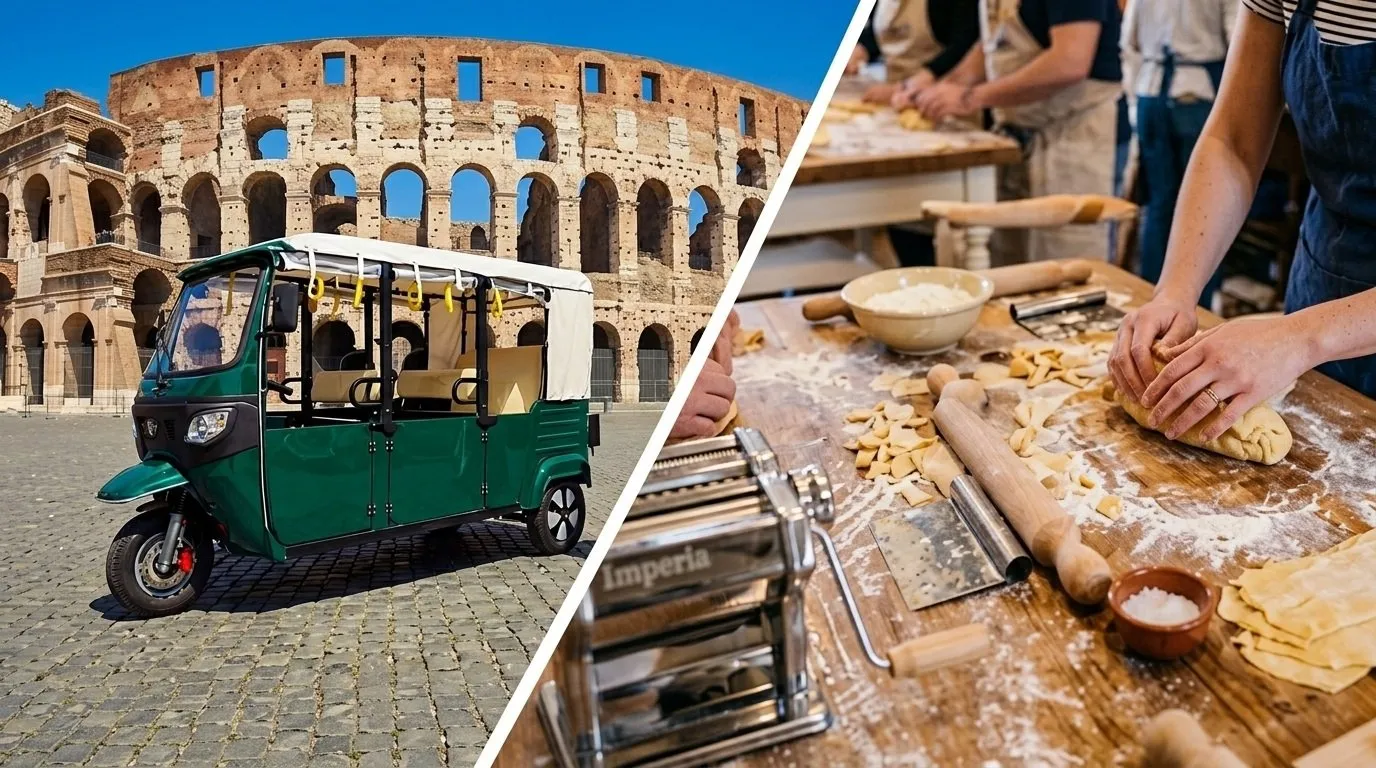
Rome's greatest landmarks by private electric tuk-tuk, then a proper Roman meal: supplì, carbonara and tiramisù at a historic restaurant that has been serving traditional Roman food for more than 30 years. Just your group, at your own pace.
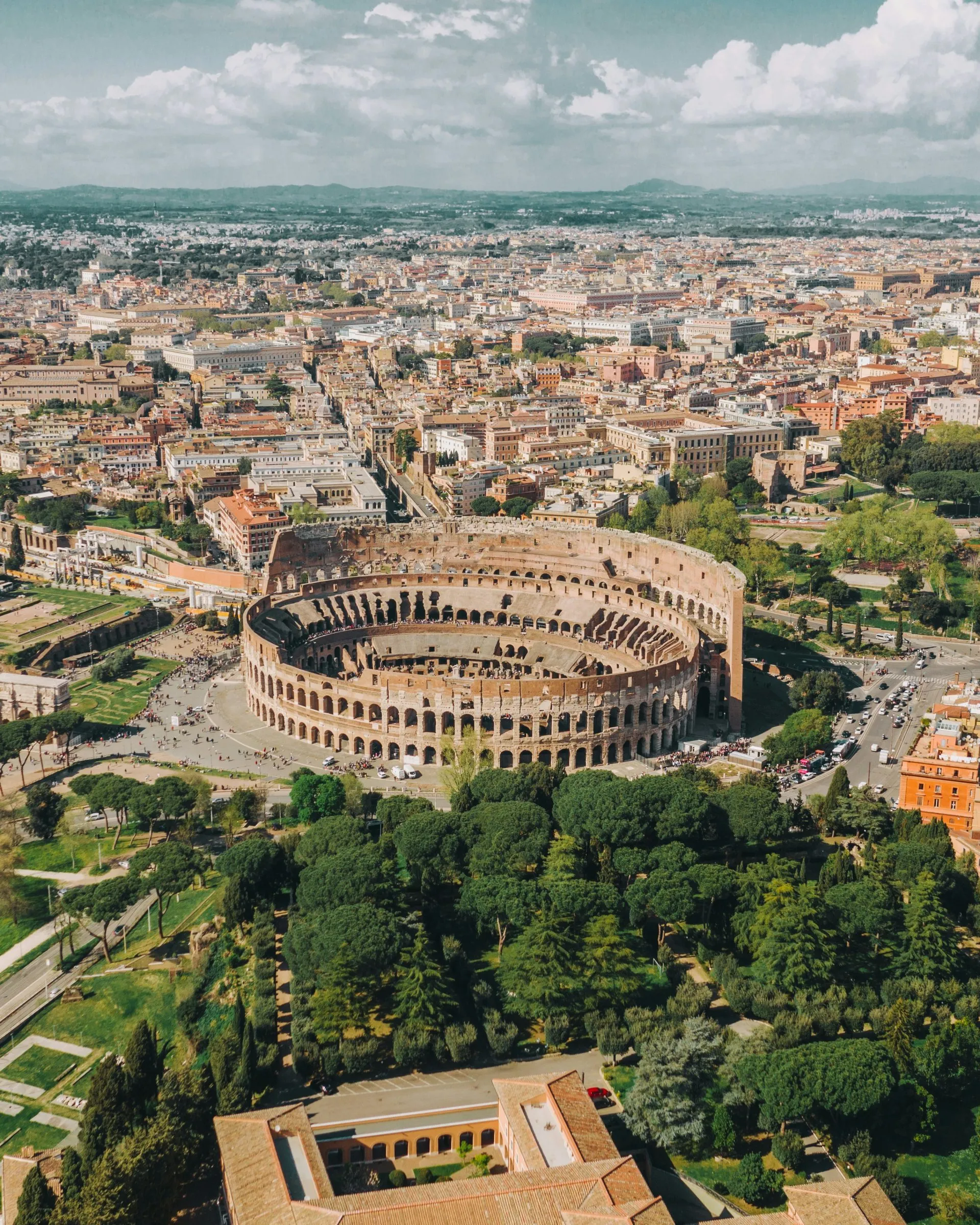
The route starts in Piazza del Popolo and crosses the historic centre: Piazza Navona, the Pantheon, the sacred area of Largo Argentina where Julius Caesar was killed, Piazza Venezia and the Vittoriano, the Colosseum, the Circus Maximus, the Mouth of Truth, the Theatre of Marcellus, the Trevi Fountain and the Spanish Steps at Trinità dei Monti, with photo stops along the way. Because it runs on electricity, the tuk-tuk can enter the restricted traffic zones that coaches and taxis can't, so you get closer to each monument than you would any other way. Your driver knows the city well and is happy to answer questions.
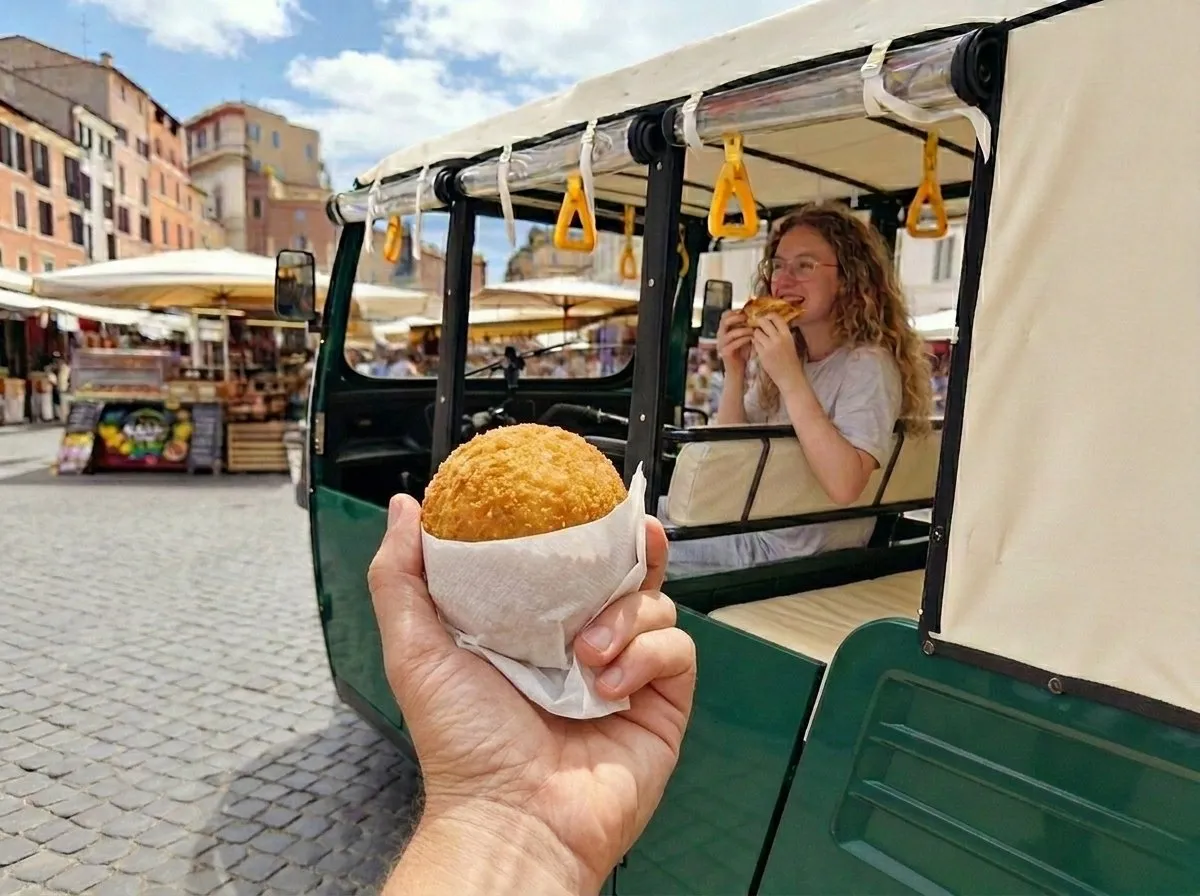
Then it's time to eat. Depending on your start time, the tour ends with lunch or dinner at the restaurant: supplì and tomato bruschetta to start, a plate of carbonara or a classic round Roman pizza, tiramisù, and a glass of wine, a beer or a soft drink, with water. All included, at no extra cost.
Rome is its monuments, but it is also its table. This tour gives you both, without the rush.
Tour stops
Loading the route map…
-
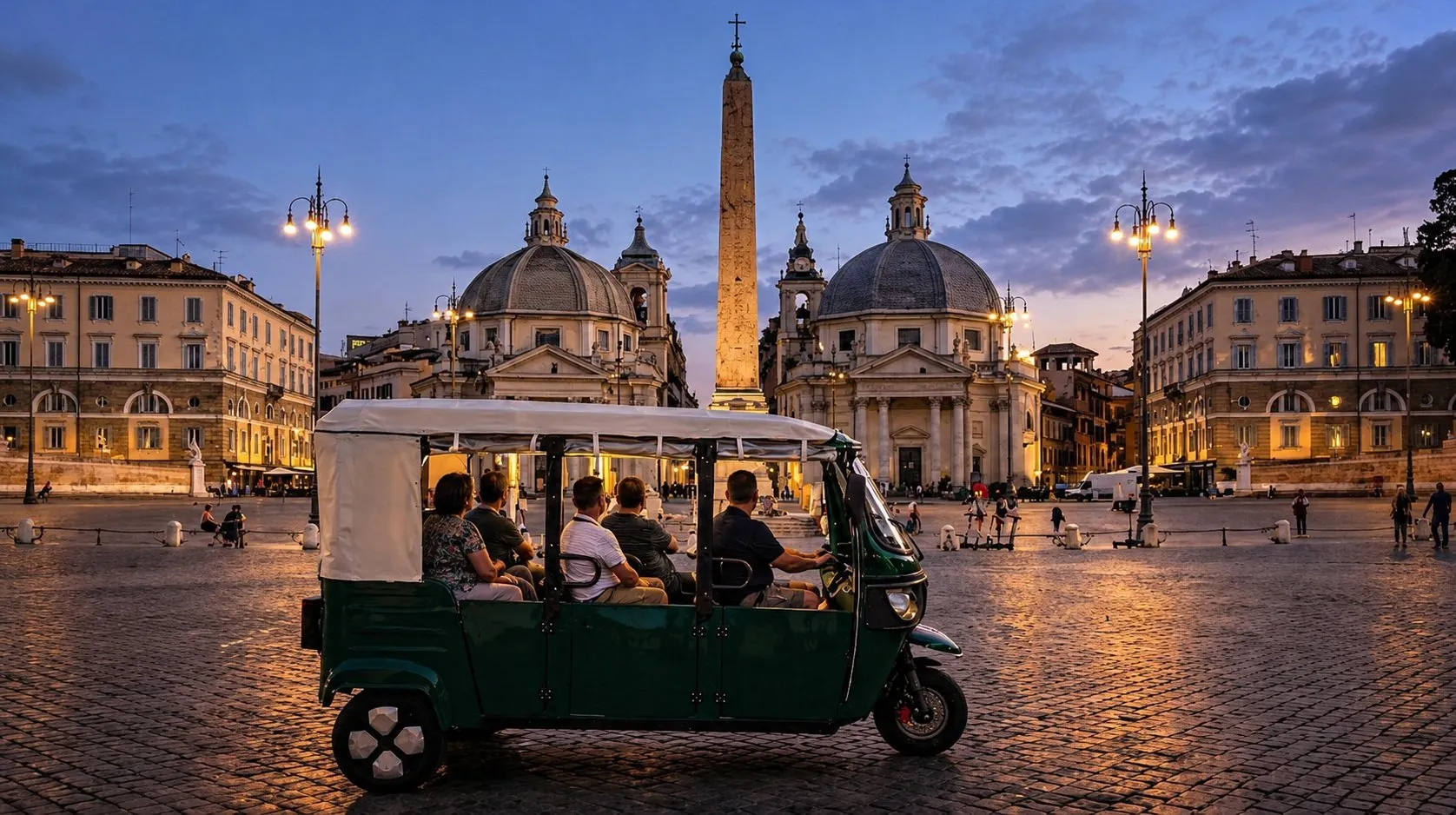
Piazza del Popolo
Stop: 10 minPiazza del Popolo is one of the most famous, elegant and scenic squares in Rome, located at the foot of the Pincio hill and historically considered the main north gateway to the city. At its center stands the majestic Obelisk Flaminius, one of the oldest and highest in Rome, transported from Egypt by Emperor Augustus. The obelisk is surrounded by the fountain of the Lions, while the short sides of the ellipse house the fountain of Neptune and the fountain of the Goddess Rome.The square is also famous for its religious architecture:
- The Twin Churches: Santa Maria in Montesanto and Santa Maria dei Miracoli, built in the seventeenth century, which create a suggestive symmetrical effect and frame the so-called Trident, the starting point of three important streets in the historic center: Via del Corso, via del Babuino and via di Ripetta.The Basilica of Santa Maria del Popolo: Located next to the historic Porta del Popolo, it is an authentic treasure chest of art that houses masterpieces
-
Piazza Navona
Stop: 10 minPiazza Navona is one of the most famous and monumental squares in Rome, a true masterpiece of the Roman Baroque. Often defined as an elegant "urban living room", the square owes its monumental splendor to the artistic rivalry between two geniuses of the time: Gian Lorenzo Bernini and Francesco Borromini. At the center of the scene dominates the spectacular Fountain of the Four Rivers of Bernini (1651), topped by a large Egyptian obelisk; the fountain dialogues directly with the majestic concave facade of the Church of Sant'Agnese in Agone, designed by Borromini.
-
Pantheon
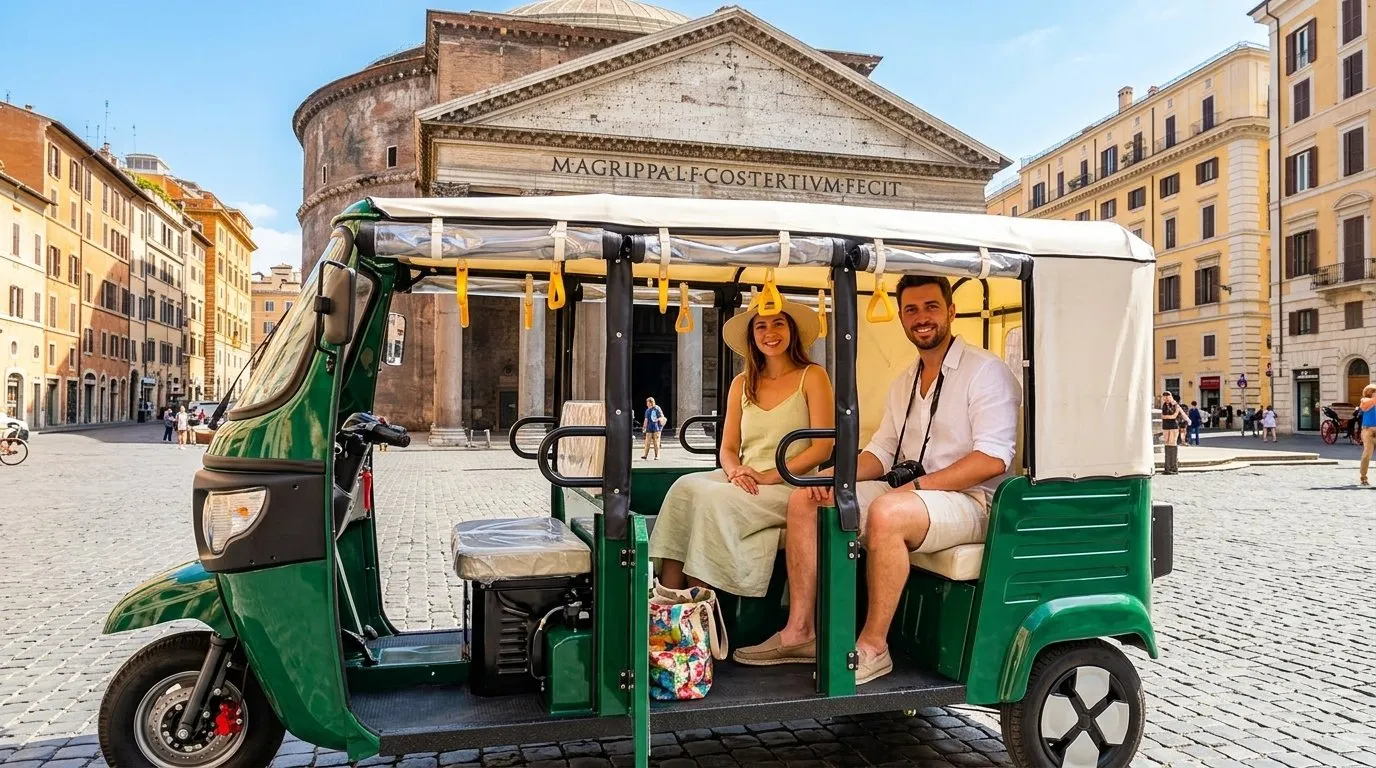
Stop: 10 minThe Pantheon is one of the best preserved monuments of ancient Rome in the world, located in Piazza della Rotonda. Originally founded in 27 BC by Marco Vipsanio Agrippa as a temple dedicated to all the deities, it was completely rebuilt in its present form by the emperor Hadrian between 112 and 128 AD. The building is famous for its extraordinary architectural structure:
- The Pronaos: The monumental entrance features a Greek temple-style porch, supported by 16 impressive granite Corinthian columns.
- The Roundabout and the Dome: The central body is a cylindrical structure topped by a hemispherical concrete dome. With an internal diameter of 43.44 meters, it still holds the world’s largest non-robbed concrete dome. The internal proportions are perfect: the height of the dome is exactly equal to the diameter of the circular space below.
-
Area Sacra di Largo di Torre Argentina
Stop: 10 minLargo di Torre Argentina is one of the most famous and fascinating squares in the historic center of Rome, known above all for hosting the Sacred Area, the largest archaeological complex of the republican age visible in the city. Brought to light between 1926 and 1929 during impressive urban demolition work, the site is located below the modern street level and is enclosed in the heart of the capital.
What to see in the Sacred Area
- The four Roman temples: The excavation houses the remains of four sacred structures dating back to a period between the fourth and second centuries BC. In the absence of certain identifications, archaeologists conventionally named them with the first letters of the alphabet: Temple A, B, C and D. Among these stands out the Temple B for its characteristic circular plan.
- The place of the death of Julius Caesar: Behind the temples B and C are preserved the tuff foundations of the Curia of Pompey. It is precisely at this exact point that on March 15, 44 BC (the famous Ides of March) Julius Caesar was assassinated.
-
Piazza Venezia-Vittoriano
Stop: 10 minPiazza Venezia is one of the most famous and important squares in Rome, located at the foot of the Capitol. The square is dominated by the imposing white mass of the Victorian (the National Monument to Vittorio Emanuele II, also known as the Altar of the Fatherland), built between the end of the nineteenth century and the beginning of the twentieth century to celebrate the Unification of Italy.The monument is distinguished by the following main features:
- The Goddess Rome: At the center of the curved structure stands a newsstand with the statue of the Goddess Rome, lying against a golden background and flanked by bas-reliefs that symbolize the values of the nation.
- The Unknown Soldier: At the foot of the statue is the shrine of the Unknown Soldier, the tomb of an unidentified soldier who fell in the First World War, symbol of the collective sacrifice of the Italians.
- Structure and Symbolism: Entirely made of white white marble by Botticino, it houses braziers with perennial flames constantly guarded by the guard of honor.
-
Colosseo
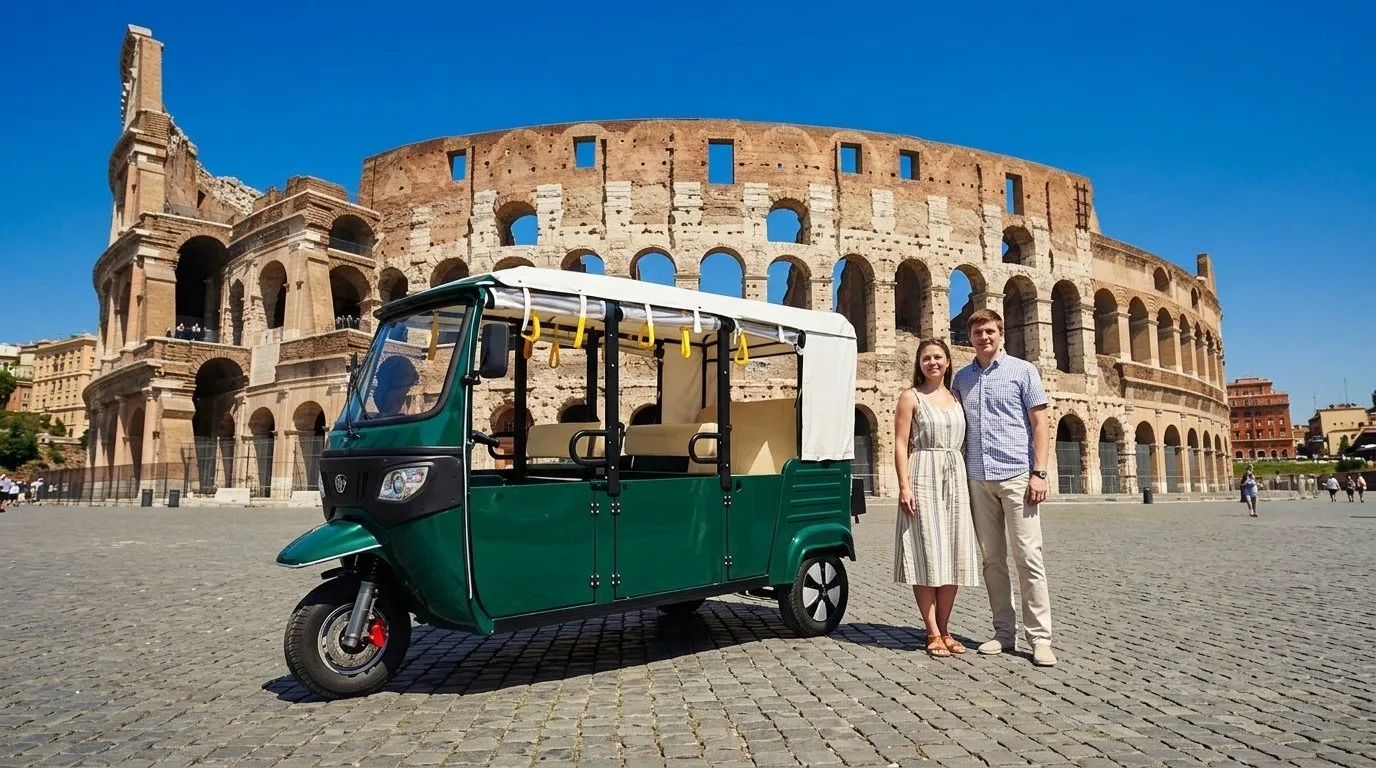
Stop: 10 minThe Colosseum, originally known as the Flavian Amphitheatre, is the largest Roman amphitheater in the world and is located in the historic center of Rome. Included among the UNESCO World Heritage Sites and included among the New Seven Wonders of the World, it is the most famous symbol of the ancient Roman civilization. Ancient function: It was mainly used for gladiator games (munera), hunting simulations with ferocious animals (venationes) and, in the early days, spectacular naval battles (naumachie). • History and Construction: It was started under Emperor Vespasian around 70-72 A.D. and inaugurated by his son Titus in 80 AD. It was built in the area previously occupied by the artificial pond of the Domus Aurea of Nero.
- Size and Capacity: It has an elliptical plant with an external perimeter of 527 meters, an original height of about 50 meters and could accommodate between 50,000 and 80,000 spectators.
-
Circo Massimo
Stop: 10 minThe Circus Maximus is the largest stadium for shows ever built by man. Located in the valley between the Palatine and Aventine hills in Rome, it was the main place dedicated to the racing of wagons and chariots in ancient Rome. • Size and capacity: The sand track measured about 600 meters long by 140 meters wide. It could accommodate between 150,000 and 250,000 spectators.
- History: Used since the time of the Tarquini kings and linked to the mythical episode of the Rat of the Sabines, it took on a monumental masonry form with Julius Caesar and Emperor Trajan. It remained active until the 6th century AD.
- The site today: It currently looks like an immense flat public park. Although most of the stone and marble structures have been lost over the centuries, the semicircular end preserves the archaeological area with the ancient shops (tabernae) and the medieval Torre della Moletta.
-
Bocca della Verità
Stop: 10 minThe Mouth of Truth is an ancient and famous marble mask, with a diameter of about 1.80 meters and a weight of more than 1,300 kg, located since 1632 in the porch of the Church of Santa Maria in Cosmedin in Rome. The sculpture, dating back to ancient Rome, depicts a bearded male face with eyes, nose and mouth drilled. The popular belief that the mask could bite or cut off the hand of anyone who inserted the limb into the mouth by pronouncing a lie spread. It was a particularly feared trial by jealous husbands to verify the loyalty of the brides.
-
Teatro di Marcello
Stop: 10 minThe Teatro di Marcello is one of the oldest stone theatres that have come down to us and an exceptional example of urban stratification in the heart of Rome, located in the Campo Marzio. Originally designed by Julius Caesar, it was completed and inaugurated by Emperor Augustus in 13 BC, which dedicated it to the memory of his nephew Marcello. From an architectural and stylistic point of view, its imposing arched façade inspired the subsequent construction of the Colosseum.The majestic original structure had a diameter of 130 meters and a height of over 32 meters, being able to accommodate between 15,000 and 20,000 spectators. The semi-circular travertine façade originally developed on three levels:
- First order (inferior): pillars with semi-columns of Doric (or tuscan) style.
- Second order: pillars with semi-columns of ionic style.
- Third order (superior): a closed penthouse decorated with Corinthian pilasters, now completely lost.
-
Fontana di Trevi
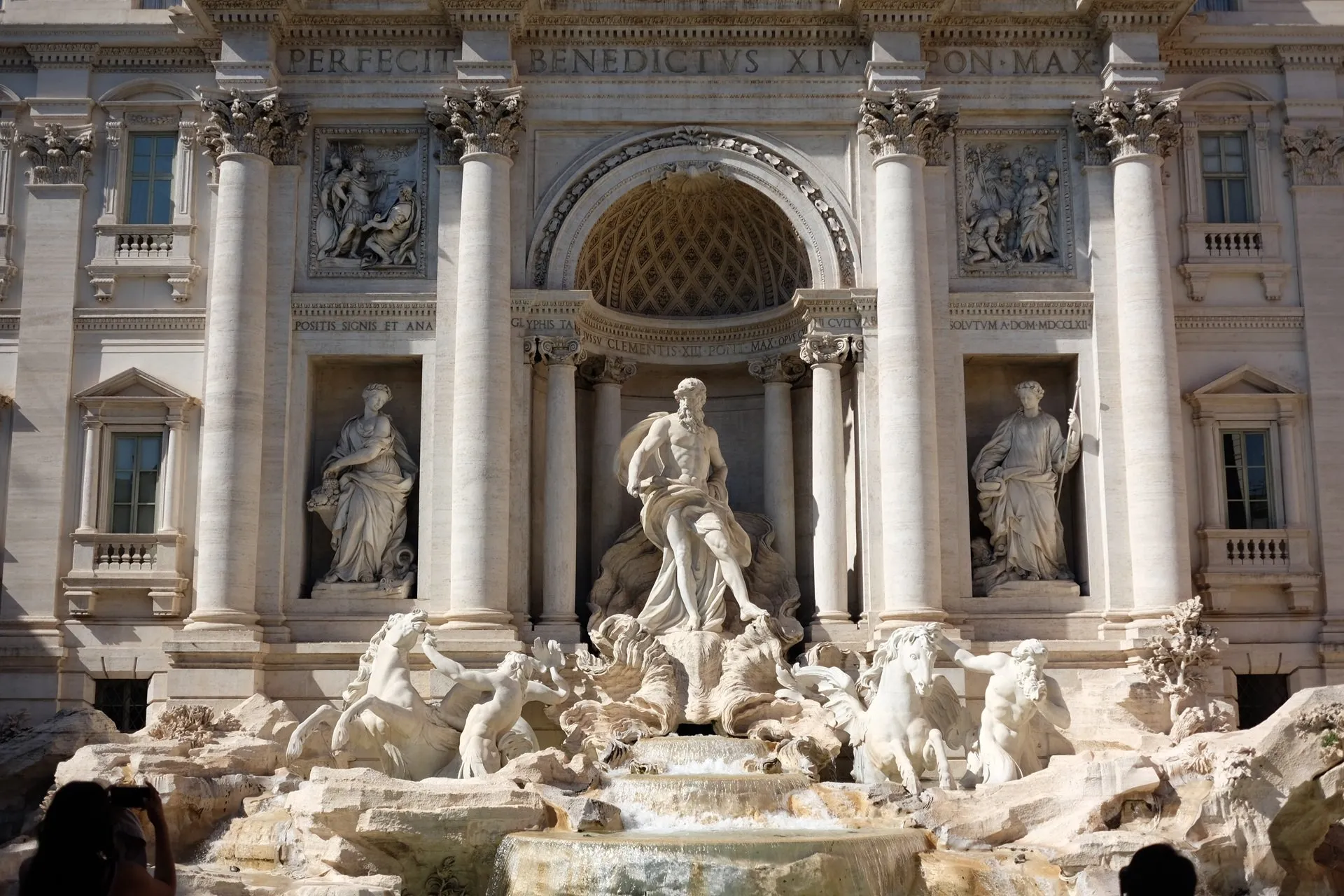
Stop: 10 minThe Trevi Fountain is the largest and most famous fountain in Rome, as well as one of the most famous masterpieces of the late Baroque in the world. The fountain constitutes the "exhibition" (the monumental terminal) of the Aqua Virgo, the only one among the ancient Roman aqueducts to have remained continuously in operation from 19 BC until the present day. At the center of the composition stands the statue of Ocean, the god of the sea, depicted on a claus in the shape of a shell pulled by two winged sea horses, in turn guided by newts. The two horses symbolize the two souls of the sea: one is agitated and the other is calm. In the side niches are the statues of Abundance and Health, which celebrate the benefits of water. According to a famous tradition, throwing a coin of shoulders inside the tank ensures the return to Rome.
-
Trinità dei Monti-Piazza di spagna
Stop: 10 minThe Church of the Holy Trinity of the Mountains is one of the most famous Catholic places of worship in Rome, famous for its dominant position on the hill of the Pincio overlooking the Spanish Steps. The church is connected to the square below through the monumental staircase of Trinità dei Monti. Its construction was started in 1502 at the behest of the King of France Louis XII and is still one of the five French-speaking churches in Rome.
-
Ristorante
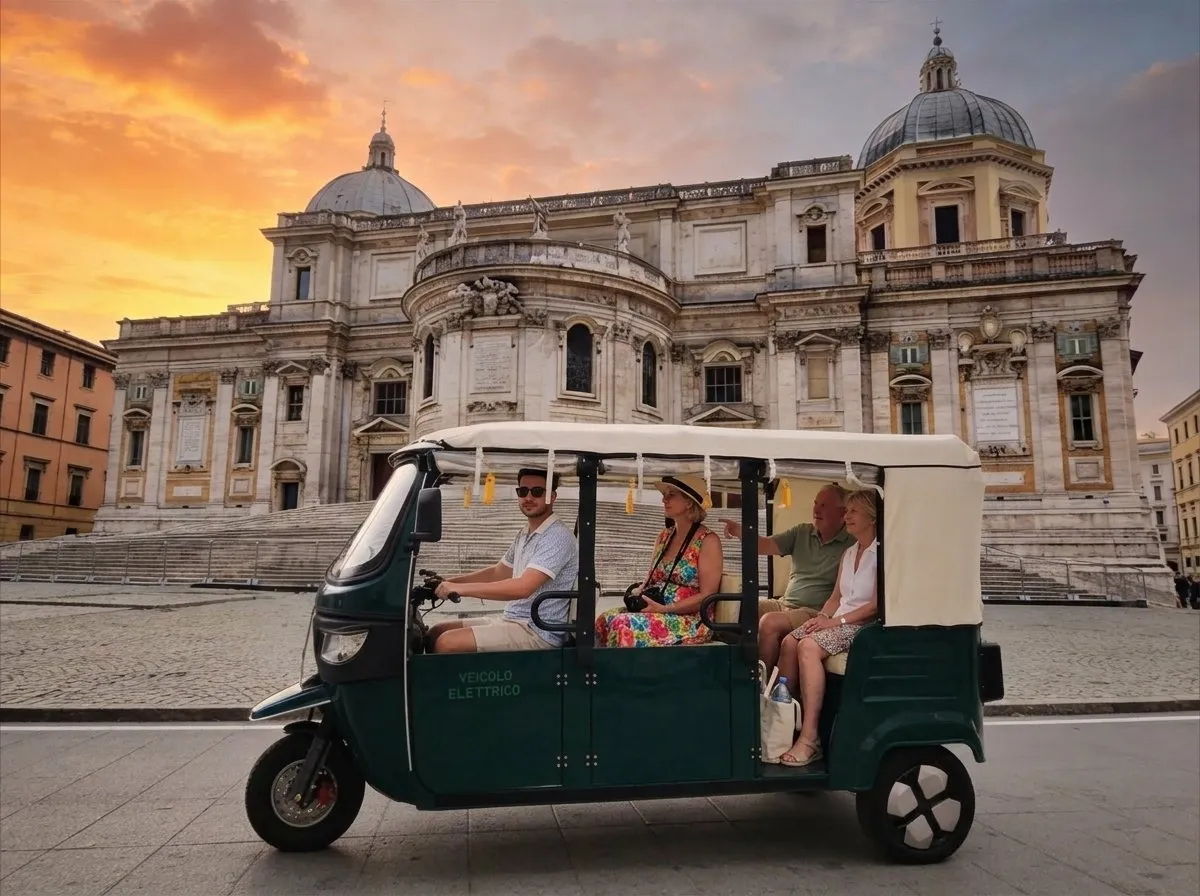
Historic restaurant, in operation for more than 30 years, frequented by the Romans themselves, with typical and traditional cuisine of the city, near the Papal Basilica of Santa Maria Maggiore, one of the four Papal Basilicas of the City and the oldest Marian sanctuary in the West.
What is included
- Private electric tuk-tuk — your group only, up to 4 passengers per vehicle (no shared rides)
- Driver who knows the route and the city — happy to answer questions along the way
- Access to restricted piazzas and pedestrian zones off-limits to standard tour vehicles
- Photo stops at Rome's most iconic sites, from Piazza del Popolo to the Colosseum and the Trevi Fountain
- Lunch or dinner at a historic Roman restaurant: supplì, tomato bruschetta, carbonara or Roman pizza, tiramisù, one drink (wine, beer or soft drink) and water
Additional info
- Free pick-up at your hotel or B&B if it is in the city centre, on request.
- The stops can be changed to suit you; the lunch or dinner stays at the end of the tour.
- Skip-the-line tickets for the Colosseum, the Roman Forum, the Vatican Museums and the Sistine Chapel (and other sights) on request, subject to availability and price.
- A licensed tour guide can join you on request, during the tour or inside the monuments.
Frequently asked questions
Where do we eat, and what is included?
At the end of the tour, at a historic Roman restaurant open for more than 30 years. Lunch or dinner (depending on your start time) is included: supplì and tomato bruschetta, a plate of carbonara or a Roman pizza, tiramisù, and a glass of wine, a beer or a soft drink, with water.
How long is it, and what will we see?
About 4 hours and twelve stops, from Piazza del Popolo to Piazza Navona, the Pantheon, Largo Argentina, Piazza Venezia, the Colosseum, Circus Maximus, the Mouth of Truth, the Theatre of Marcellus, the Trevi Fountain and the Spanish Steps.
Can we change the stops?
Yes: tell us what you would like to see and we can adapt the stops, keeping the lunch or dinner at the end of the tour.
Where does it start? Can you pick us up?
It starts in Piazza del Popolo (the exact spot is on your ticket). If you are staying in the city centre, we can pick you up at your accommodation free of charge: ask us after booking and we will confirm.
Other tours to discover
 €65
Rome in 2 Hours
 €85
Rome Highlights Tour
 €110
Rome's Great Basilicas
 €90
Rome Food Tour
 €95
Rome by Night
 €140
Rome Wine Tasting Tour
 €175
Basilicas & Pasta-Making Class
 €150